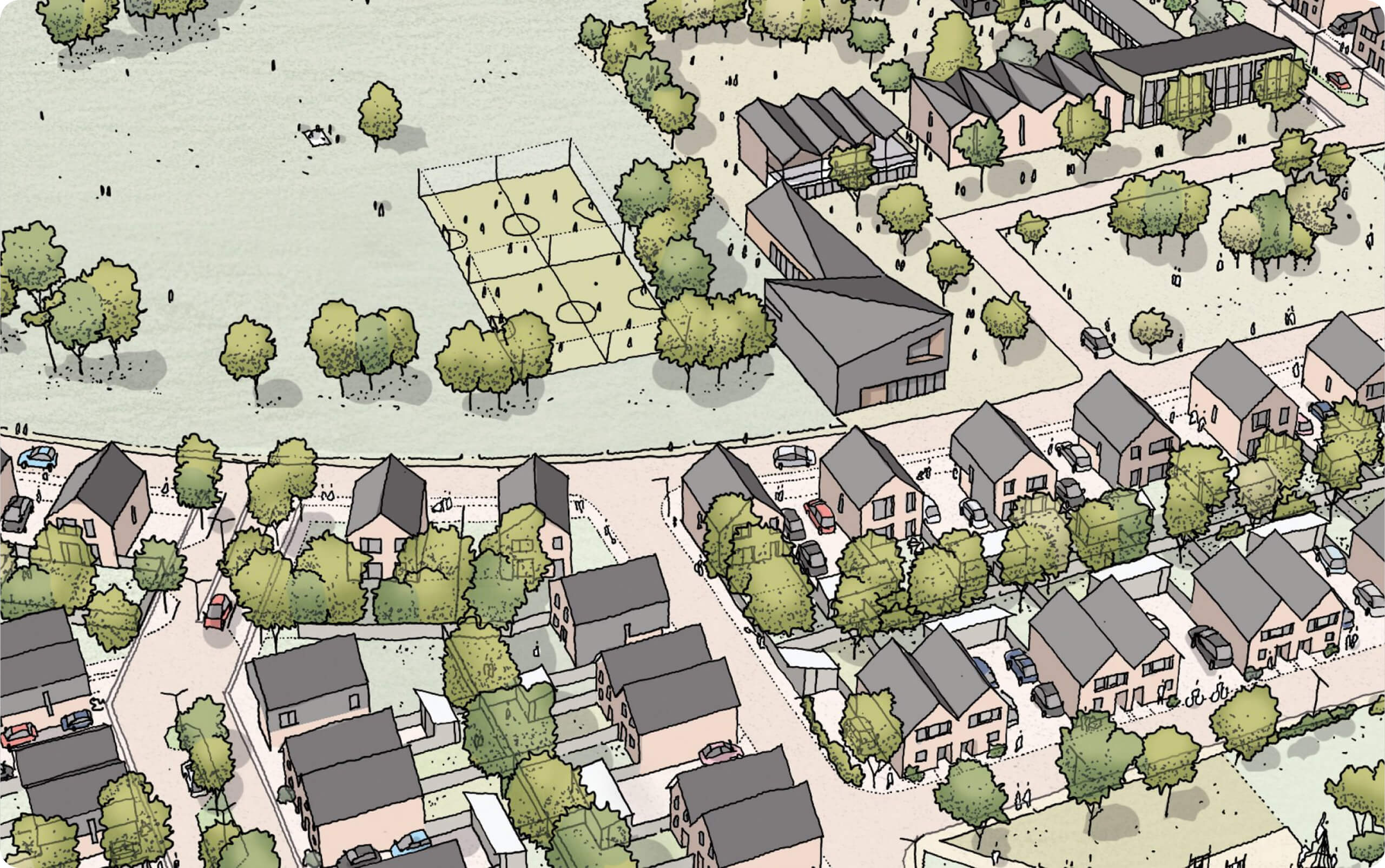
2026 will be a pivotal year for the UK housing sector.
The Government continues to reinforce its ambition to deliver 1.5 million new homes over the current Parliament. With the new SAHP (social and affordable homes programmes) in place, it will want to see significant progress in the next year. However, it will not come without challenges.
Why 2026 Matters for the Housing Sector
UK housing providers face continual challenges, such as soaring energy costs and strict safety regulations, to name a few. Additionally, rural RPs face other obstacles, such as ageing housing stock, energy improvement measures, smaller scale balance sheets, often strong opposition to new developments, and delivery and travel restrictions, for example, poor transport routes down countryside lanes or wider home dispersion in isolated settlements.
Recent progress towards the ambitious goal has lagged due to delivery and planning permissions, making the goal seem out of reach. Whether the 1.5 million homes figure is achieved or, at the very least, increased supply is driven as hard as possible, is down to strategic planning and housing partnerships aligning with policy changes and new programmes.
Throughout the first half of the year, we will see changes in policies and government initiatives that aim to develop the housing sector. The second half of the year will see housing partnerships navigate these changes and work towards the 1.5 million housing goal within this term of parliament, or more likely beyond.
Major UK Housing Policy Changes on the Horizon
The start of 2026 will see the start of SAHP, a new 10-year £39 billion “Social and Affordable Homes Programme”. The programme aims to maximise the supply of affordable homes, with a core focus on social rent homes. Expect strategic partnerships, funding bids, and early-stage construction plans.
As well as new programmes, the government is pushing for system changes for more effective housing policies and workforce funding:
- Planning and Infrastructure Act (2025) will speed up building timelines by making it harder for local councils to block developments, encouraging higher-density homes, and revising the National Planning Policy Framework.
- The Growth and Skills Levy is a major reform to the Apprenticeship Levy, allowing employers to use levy funds for short, flexible training courses so that businesses can respond to evolving skills and demand for specialist staff.
- To address specific skill shortages, in the government’s Industrial Strategy, public funding is being directed towards priority sectors. This includes construction, with significant funding for new construction workers, construction skills bootcamps and the establishment of new Technical Excellence Colleges.
Lastly, from May 2026, the Renters’ Rights Act will be introduced, making major changes in the private rented sector. There will be no more ‘no-fault’ evictions, all tenancies will move to open-ended periodic agreements, and a new set of rules on rent increases, pets and tenant protections.
What does this mean for Partnership Housing?
Partnership housing is a collaborative model where housing associations, local authorities and developers team up to deliver affordable homes. They share resources, risks, and goals to tackle housing shortages more effectively than if they faced them individually.
New policy changes affect each partner differently:
- Local authorities have to consider planning and strategy, balancing local needs and national targets, and community logistics.
- Housing associations need to consider the funding environment, multi-year budgeting, and positioning as a strategic partner as well as a building manager.
- Developers must consider how funding and approvals will shift workflow and secure significant labour.
Practical Roadmap for 2026
With all of these changes and additions, we have some actionable advice to reduce panic and prepare you for the year.
- Collaborate deeper. By collaborating with local authorities, housing associations and developers, you can develop a stronger, skilled unit to fully utilise new programmes, training opportunities and policy updates.
- Plan earlier. By developing strategic plans now, you can adopt new policies and programmes early. Funding will be allocated to housing partnerships that align with SAHP.
- Move from reactive to strategic. By shifting from project-by-project planning to programme-led delivery, you can build a strong internal plan to streamline work, align with regional strategies and remain flexible with policy changes.
- Remaining aware of risks is a good idea, as with new policies come with unexplored challenges, for example, ever-changing policies, funding changes, skills shortages and compliance.
SH Partnerships
We’re here to listen, support and collaborate with you. Whether you have a question, want to explore partnership opportunities, or need expert insight on new policies and strategic planning, we’re ready.
Get in touch with an enquiry form or drop us an email at contact@shpartnerships.co.uk.